Returning to yourself.
“Where did I go?”
You may not recognize the woman in the mirror right now. Hair thinning at the part is common in the year after birth. Libido has shifted, or vanished, or returned and changed shape. Lubrication may not be what it was. None of this means anything is wrong with you. All of it can be cared for.
Connection, on your terms.
Compounded oxytocin — a nasal spray or a dissolving strip — supports desire and closeness for you, not for anyone else’s expectations. Prescribed thoughtfully, after a clinician reviews your intake.
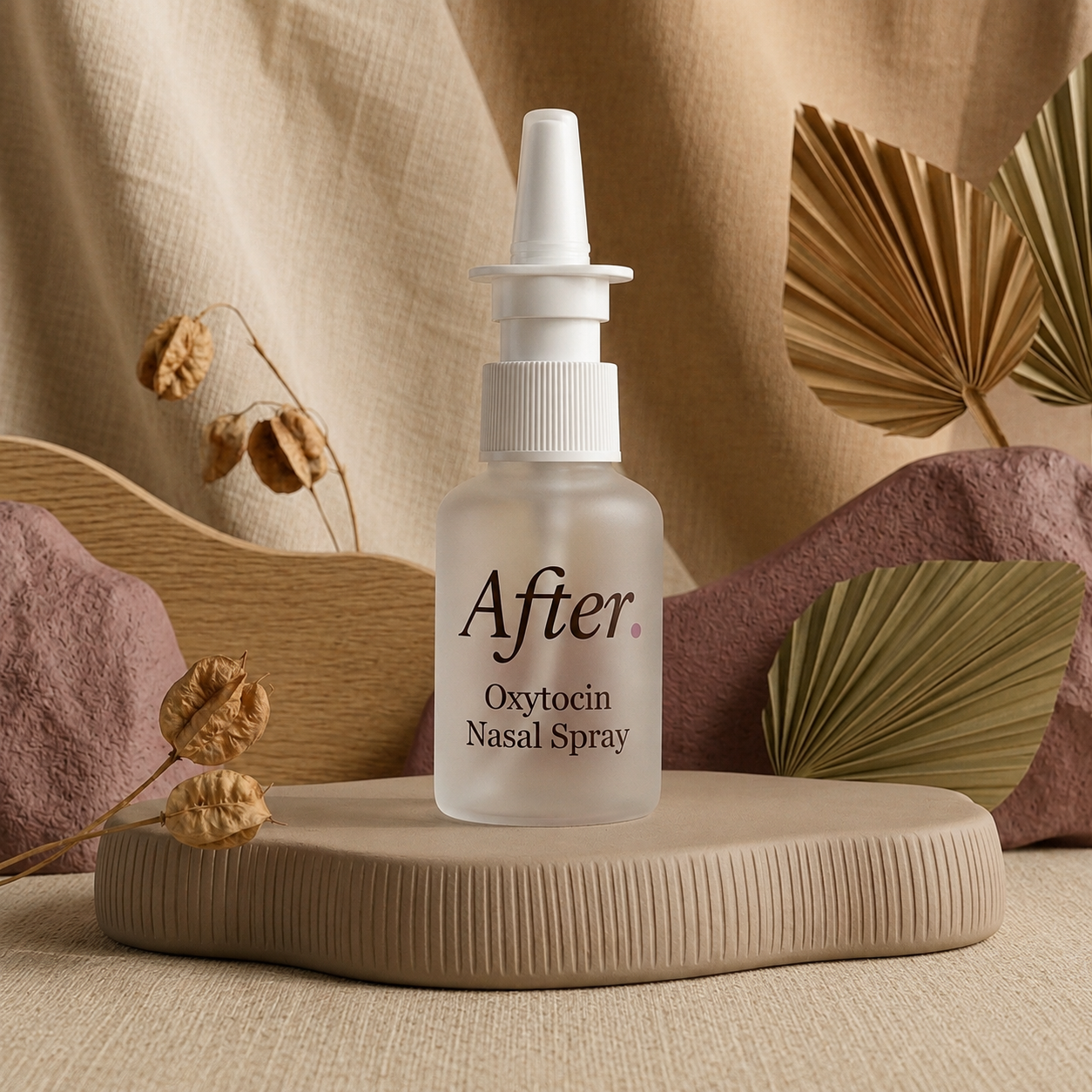
Oxytocin Nasal SprayCompounded oxytocin
Compounded oxytocin for intimacy and connection — prescribed thoughtfully, for you, not for anyone else’s expectations.
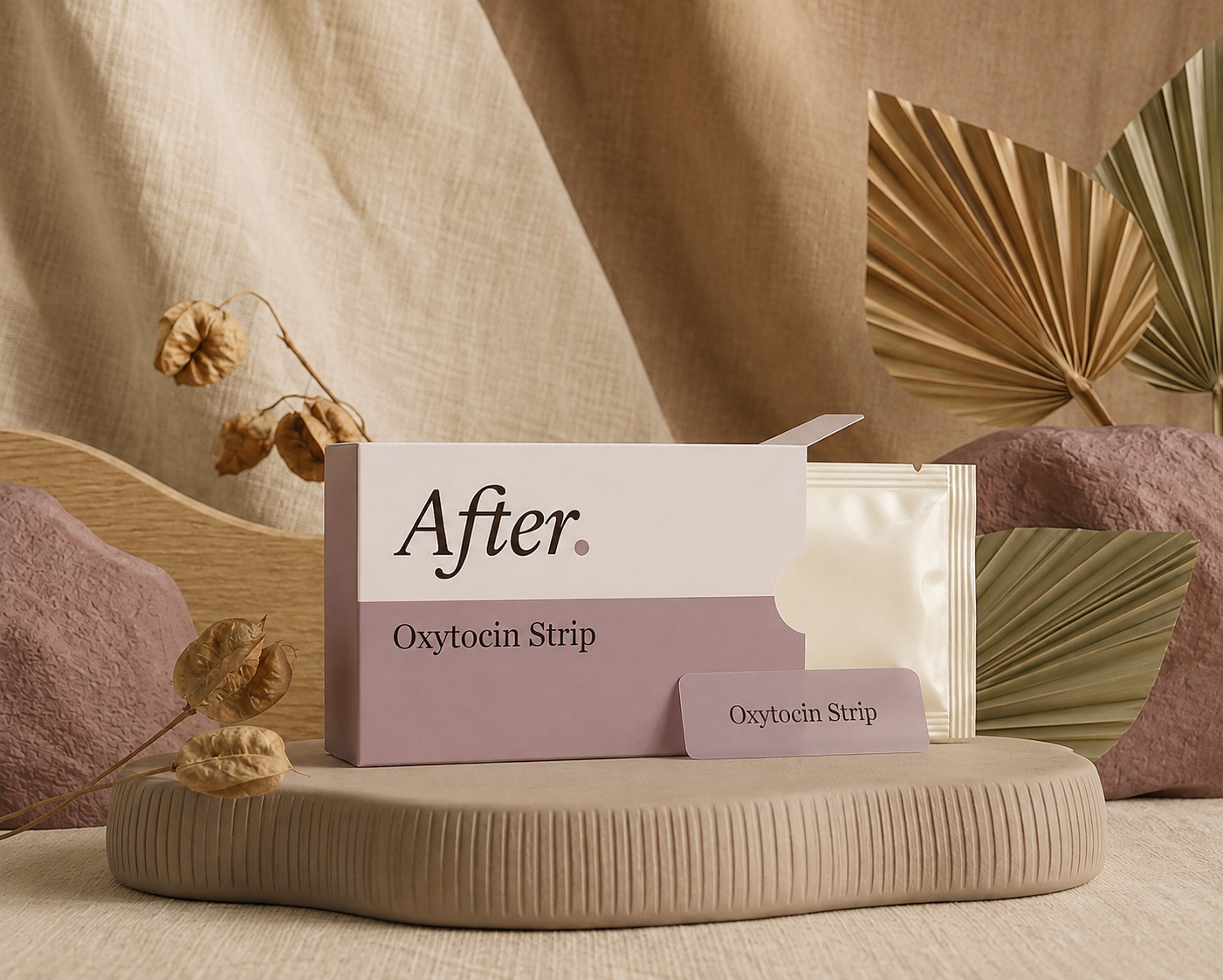
Oxytocin StripCompounded oxytocin
The same care in a sublingual strip — dissolves under the tongue, no spray required.
"Hair density doesn't tell us how old you are; it tells us how your follicles are doing. You don't have to live with what changes if you don't want to."
Results from this room.
Desire came back — quietly, and on my own terms. I didn’t realize how much I’d grieved it.
It took months to even search for this. The care felt private and unembarrassed — and it worked.
My doctor was honest that the research is still young. That honesty is why I trusted it — and I’m glad I did.
Shared with permission. Identifying details withheld to protect client privacy. Individual experiences vary.
What women in this room tend to ask.
I feel disconnected from my body. Is that something a clinician can help with?
Yes — and you don't have to come in with a specific symptom. The intake asks about the experience itself, in plain language. The care plan that comes back may include medication, may include mental-health pairing, may include both, may include neither. The right answer is the answer that fits you.
What is oxytocin, and how does it help?
Oxytocin is a hormone your body already makes — it's central to bonding, trust, and arousal. As a compounded nasal spray or a strip that dissolves under the tongue, it may support desire and emotional closeness. It's prescribed off-label for this use, and your clinician will walk you through what the evidence does and doesn't say.
Spray or strip — which one?
Both deliver the same medication; the difference is preference. The nasal spray acts through the nasal lining; the sublingual strip dissolves under the tongue — quieter, no spray required. Your clinician can help you choose, and you can switch at a renewal if the first route isn't the fit.
Is oxytocin safe? Who shouldn't take it?
Most clients tolerate it well — mild headache, nausea, and temporary blood-pressure changes are the common side effects. Your intake screens for the conditions that make it unsafe, including poorly controlled blood pressure and heart disease. Pregnancy and breastfeeding are also screened; it isn't prescribed during either.
Will my partner notice the difference?
That's not the question we lead with — but most women in this room report that the partner-noticing is the second-order effect. The first-order effect is that she feels more at home in her own body. That's the work.
Many women in Returning to yourself also care for The shift — perimenopausal hormone changes drive much of what's quiet here.
Read The shiftTake a few minutes with us.
The intake takes ten to fourteen minutes. We ask one question at a time. You can save your progress, and pick it back up whenever the moment allows.
Already an After. client? Sign in to your client portal